
/filters:quality(90)/fit-in/970x750/coros-web-faq/upload/images/72cf1478011bf4bc059328feb8bd2ca7.png)
What is Cycling Cadence?
Cadence is one of the most important performance metrics a cyclist can utilize to improve long term performance. While power and heart rate are the most well known cycling metrics, cadence is another tool that should be in every cyclists training arsenal.
Your cadence is the rate at which your pedals complete full revolutions. This is commonly measured in revolutions per minute (RPM). Most cycling devices, including the COROS DURA bike computer, display cadence in RPM.
While cadence seems like a simple figure, it plays a central role in your performace. It dictates how you apply force to the pedals and how your joints handle the load of your pedal strokes.
Understanding cadence can help reduce unnecessary strain on your muscles, knees, and hips, allowing you to increase efficiency and sustain effort for longer.
What Should My Cadence Be?
Your cadence will naturally fluctuate throughout a workout. As terrain changes and intensity shifts between climbs, flats, and intervals so will your RPM.
So what’s the right number?
In general:
- Trained athletes tend to ride at higher cadences, typically averaging between 80–100 RPM
- Beginners and casual cyclists often average lower cadences closer to 60–80 RPM
It is important to note, there is no perfect cadence to apply to all athletes. The right cadence depends on your fitness level, terrain, and training goals.
Higher cadences often support more sustained endurance, while lower cadences can be useful when higher force is required.
Let’s break that down.
Low vs. High Cadence
Both high and low cadences have their purpose in training. The key is understanding when and why to use each.
Low Cadence Benefits
Lower cadence typically involves higher torque per pedal stroke.
This approach is useful when:
- You need to sustain higher power output
- You’re climbing and require continuous force to move uphill
On steep climbs, pedaling at a high cadence can feel like you’re spinning out. Dropping to a lower cadence can provide the steady, controlled force needed to maintain upward momentum.
Incorporating low cadence drills utilizing short & intense intervals can help improve your average power over time.
High Cadence Benefits
Higher cadence means lower torque per pedal stroke.
How this benefits athletes:
- Less muscular fatigue (in the short term): Each pedal stroke requires less force.
- Reduced joint stress (in the long run): Lower torque reduces the stress on knees and hips.
- Smoother accelerations: Training at higher cadences can make bursts of speed easier to transition into.
Try it Yourself: Click here to download a cadence-focused workout to your DURA or watch and start optimizing your training!
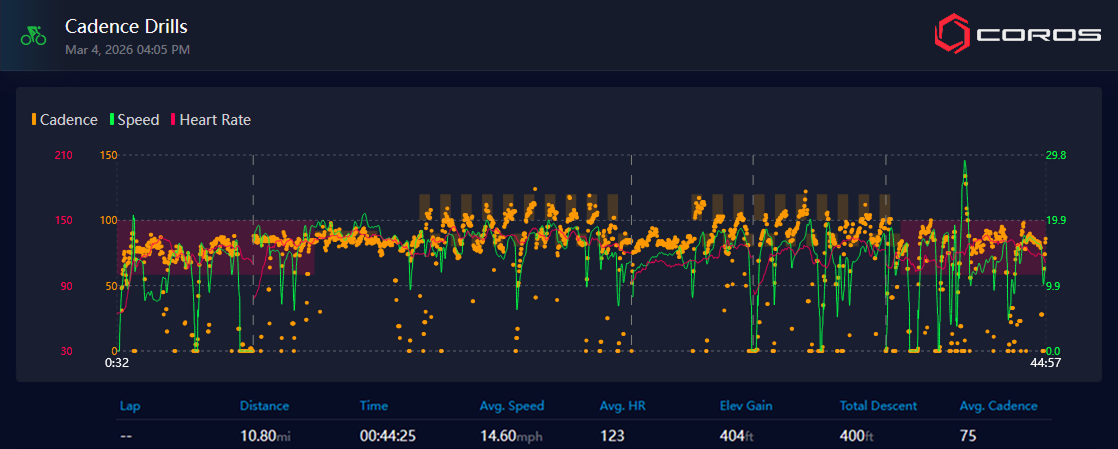
COROS Cadence Drill Workout
How Do I Measure Cadence?
Tracking cadence is straightforward thanks to modern cycling technology, and there are multiple tools to help.
Power Meters
Most single-sided and dual-sided power meters provide cadence data. If your power meter is Bluetooth or ANT+ enabled, you can pair it directly with the DURA bike computer.
Once connected, you can customize your DURA data screens through the COROS app to display cadence alongside metrics like power, speed, and heart rate. This allows you to monitor RPM in real time and adjust your effort accordingly.
The COROS Cadence Sensor
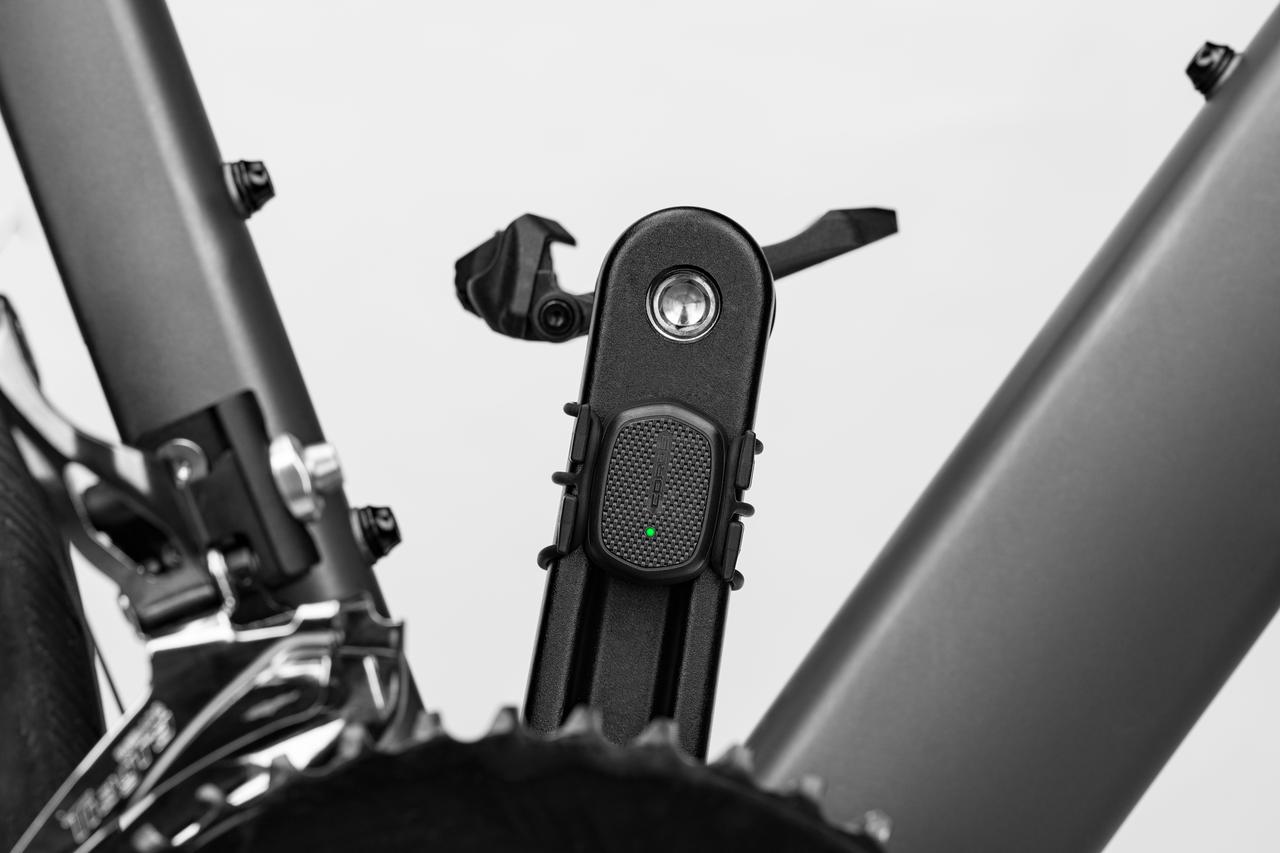
For athletes who don’t use a power meter, a dedicated cadence sensor is a cost-effective and practical alternative.
The COROS Cadence Sensor:
- Seamlessly syncs with the DURA via the COROS app
- Tracks RPM to help optimize pedaling efficiency
- Integrates with most bike computers, smartwatches, and training apps via Bluetooth
- Features a compact design that mounts easily to your crank arm
If your goal is to better understand your pedal rhythm and refine efficiency, tracking cadence alone can provide meaningful insights without the investment of a full power system.