/filters:quality(90)/fit-in/970x750/coros-web-faq/upload/images/61181416f2e6c01ba0f349592bbaa8d0.jpeg)
Riley Brady arrived at the starting line of the 2026 Western States Endurance Run carrying more than months of training. Their previous attempts at Western forced them into survival mode almost immediately, turning one of the world's most iconic ultras into an exercise in damage control. This year, the objective was different. Be patient, nail the little things, and give themselves the chance to actually race.
That mindset shaped every decision from the opening climb to the Escarpment.
"I just didn't want to risk my entire day by doing something stupid right off the bat," Riley said. "There were a couple moments in the High Country where I took a gel and thought, We're just going to let this sit for a second. It's early in the day. You've got to eat and drink early."
The approach extended beyond nutrition. Riley knew exactly where previous races had started to unravel, so simply reaching those landmarks feeling strong became early victories. They wore earplugs over the Escarpment to reduce sensory overload, covered their eyes from camera flashes, and found themselves enjoying a section of trail that had previously been associated with disappointment.
"I kind of went into this being a little afraid of the High Country," they admitted. "Then I got up there and the volunteers had done a tremendous amount of work. The trail was pristine, the wildflowers were popping. I was like, This is the best."
By Robinson Flat, the plan was working. Riley had quietly moved into podium position after starting farther back than many of the race favorites, but they had no interest in chasing placements that early.
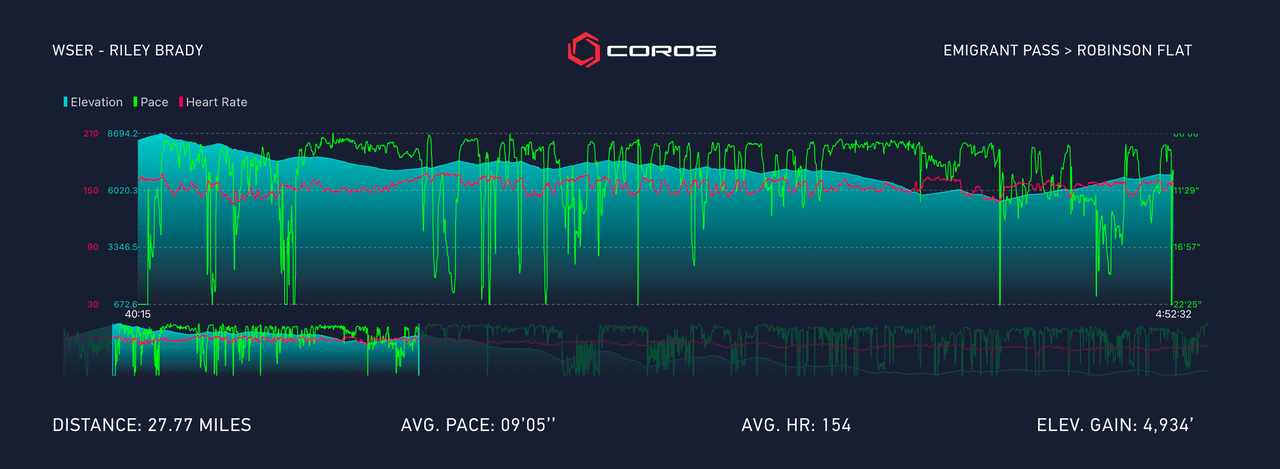
Coming through Emigrant Pass as F8, Riley focused on moving well through the high country and was in F2 entering Robinson Flat.
"I told my crew I didn't want updates on the field," Riley said. "I don't care what my position is at Robinson Flat."
Instead, their attention stayed on execution. Their crew handled aid station decisions with practiced efficiency while Riley focused on moving forward. It was the first Western States where they felt they were truly racing rather than managing problems.
"I raced it differently because this time I got a chance to race."
Robinson Flat to Rucky Chucky (Mile 30.3 - 78)
The race settled into a rhythm through the canyons. Riley continued climbing through the field, briefly moving ahead of eventual champion Jenn Lichter near Miller's Defeat before Jenn reclaimed the lead after Devil's Thumb. From there, Riley settled into second while managing a gap over the athletes behind them.
The work that made those climbs possible had begun months earlier in training.
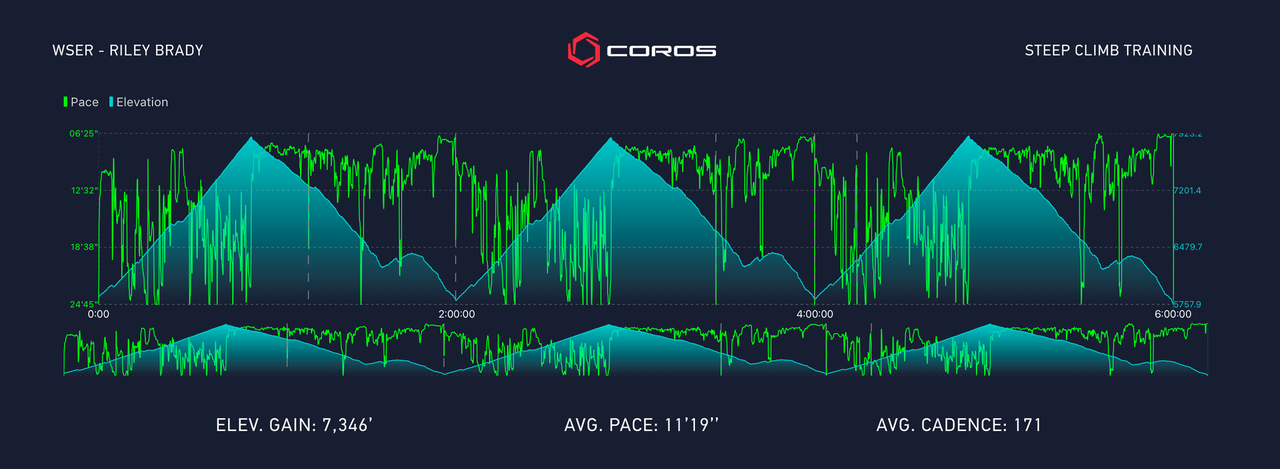
Steep hill repeats helped Riley improve their speed while power hiking, an area they previously struggled with.
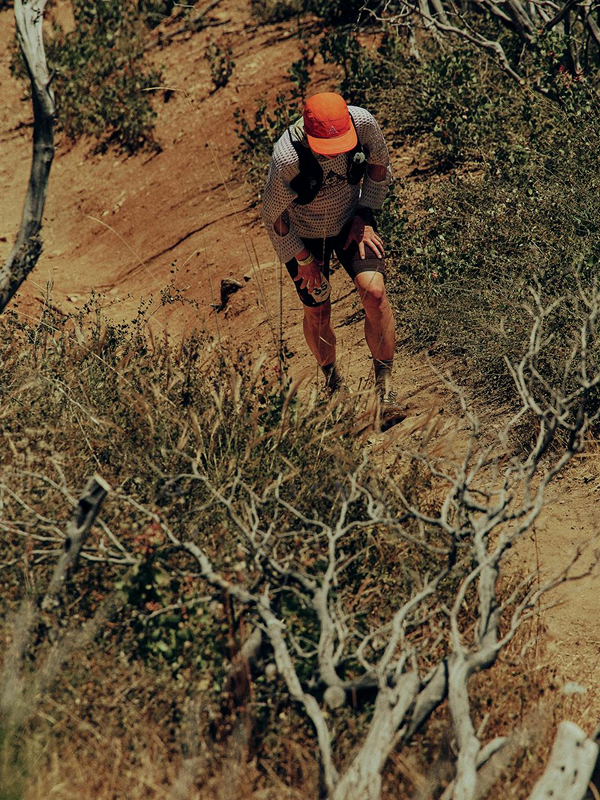
Recognizing steep hiking as a weakness, Riley deliberately shifted long runs toward sustained vertical gain around Boulder, repeating countless climbs on steeper terrain and practicing efficient power hiking rather than running.
"I wanted to get better at those steeper hiking-grade climbs," Riley said. "If it's runnable, that's where I'm comfortable. Hiking, people just hike past me like I'm standing still."
That preparation blended with a training philosophy built around feel rather than numbers. Riley uses heart rate extensively after workouts but rarely during them, reviewing the data to calibrate effort instead of letting metrics dictate every session.
This is the same way that they race. Rather than relying heavily on metrics during their race, they listen to their body, pushing when it feels good and pulling back when warning signs arise. They compare sections of the race to similar training runs based on feel and gain confidence from their analysis before race week. When it comes time to perform, they know how they should feel, and can save mental load by ignoring the numbers and honing in on the running.
That instinct carried them through the middle miles. Instead of constantly checking pace or mileage, Riley used their watch as a simple checkpoint between aid stations while relying on nutrition alerts to stay fueled.
"If I'm looking, it's to see whether I'm in range for an aid station split. Otherwise, I'm racing by feel."
The first real challenge arrived around Michigan Bluff when Riley's vision began to blur. They believe an early mistake with sodium intake was the likely cause. Cooler temperatures meant drinking less than planned, and with it, consuming almost no salt during the opening eight hours.
Trying to correct the issue at Cal 1, Riley accidentally swallowed a fizzy electrolyte tablet meant to dissolve in water.
"I immediately threw up," Riley said. "That was kind of the beginning of the downfall."
Rucky Chucky - Placer High (Mile 78 - 100)
By the time Riley reached Rucky Chucky, their vision had recovered, but the vomiting continued. Every episode forced them to stop completely before getting moving again.
"Outside of throwing up, my legs felt great," Riley said. "I wasn't even thinking about my legs. When I wasn't throwing up, I was moving really well."
Rather than spiraling, Riley leaned on experience. Vomiting had become a familiar obstacle over years of racing, and instead of treating it as the end of their day, they treated it as another problem to solve.
"I've gotten better at not catastrophizing," they said. "I've been here before. I know how to deal with this. It's probably not optimal, but it's not the end of my day."
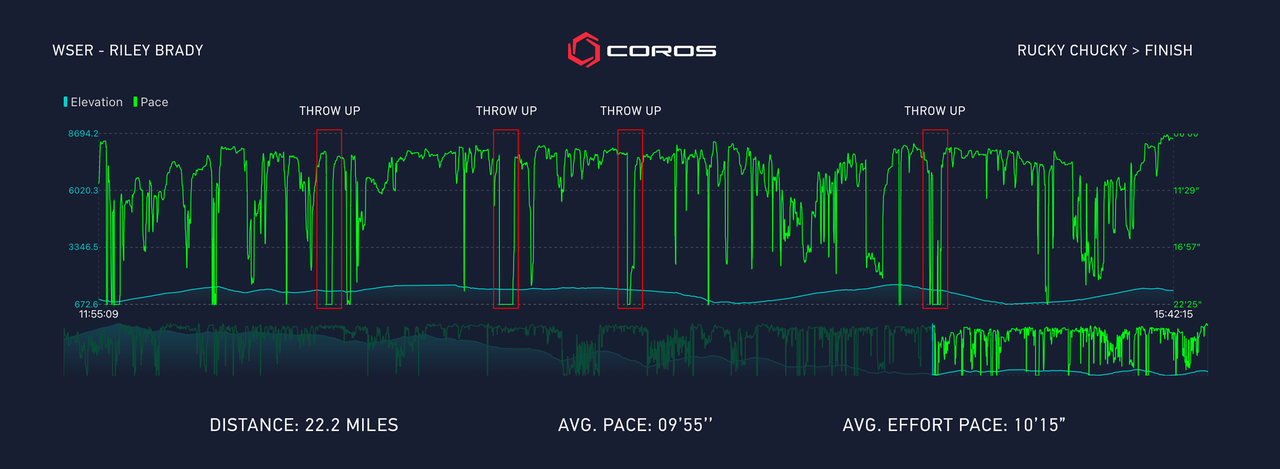
The last quarter of the race was a battle against the stomach. Riley pushed through, not fighting the issue, but letting it happen and replacing the lost carbs.
That mindset proved just as important as fitness. While chasing Jenn through the closing miles, Riley also knew Marianne Hogan was steadily pursuing from behind. There was no opportunity to ease off, even while stomach issues persisted until the desecent at Painted Rocks.
Their pacers helped shoulder the mental load, calling out what Riley needed to know while encouraging them to keep moving whenever the nausea eased.
"If we have to stop to throw up, we have to stop to throw up," Riley said. "But when we're going, let's try to be going."
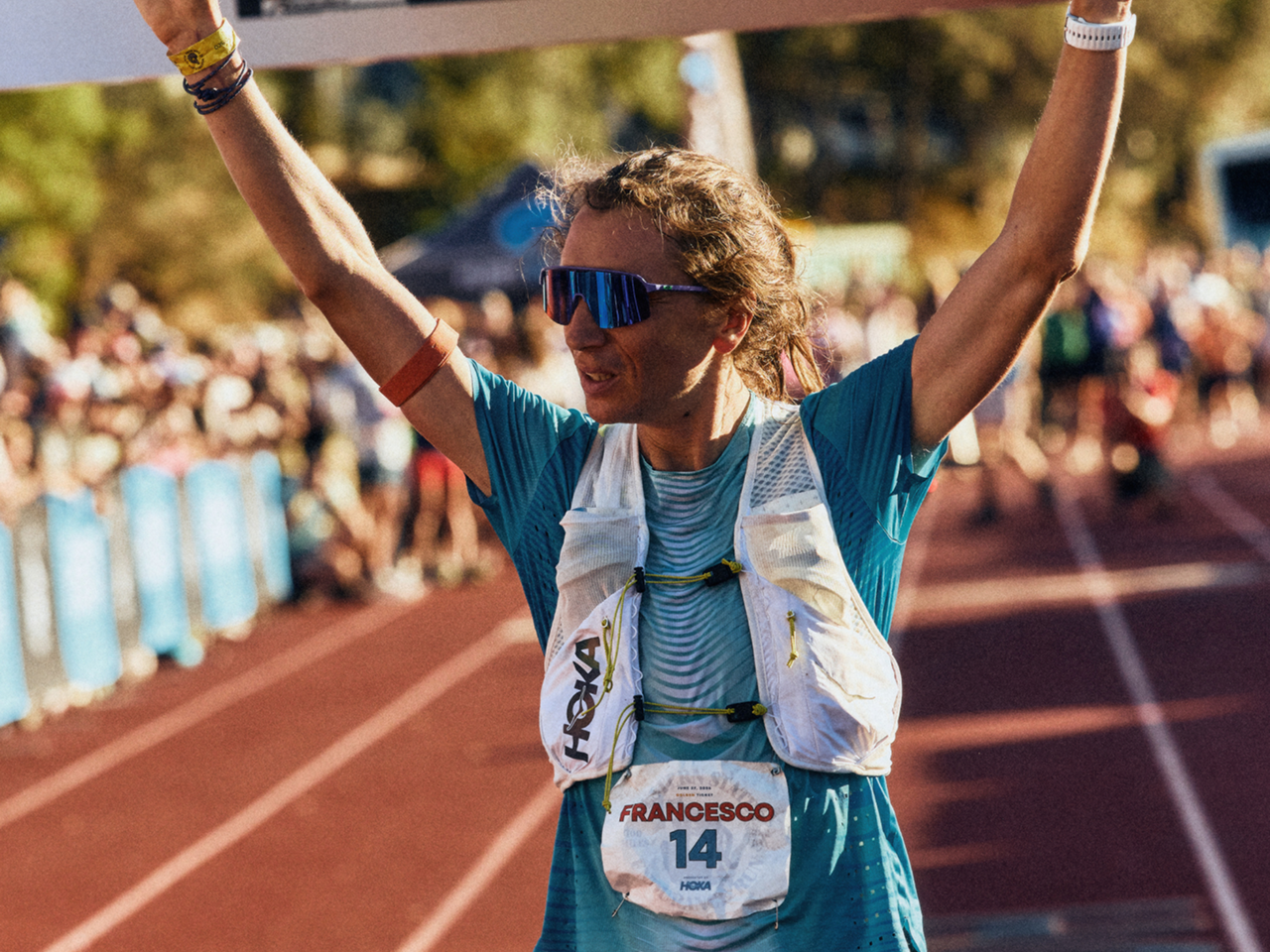
That focus never changed. Riley didn't relax through Robie Point or down the streets of Auburn. Only after crossing the finish line in second place did they finally allow the effort to end.
WSER: 2027
The result marked the best Western States finish of Riley's career, but it also left them with a rare feeling after 100 demanding miles: optimism.
"I did what I could on the day," Riley reflected. "New things always seem to pop up in ultras."
The mistakes were small enough to identify, learn from, and fix. Their legs were ready for more. Their race execution had taken a major step forward. And after finally getting the chance to race Western States the way they envisioned, Riley left Auburn already thinking about the next opportunity.
Second place was validation. The goal, however, remains unchanged. Riley plans to return in 2027 chasing something even bigger: a Western States title—and a course record.