/filters:quality(90)/fit-in/970x750/coros-web-faq/upload/images/fcd2d901e786aac254aeb65ec4f37522.png)
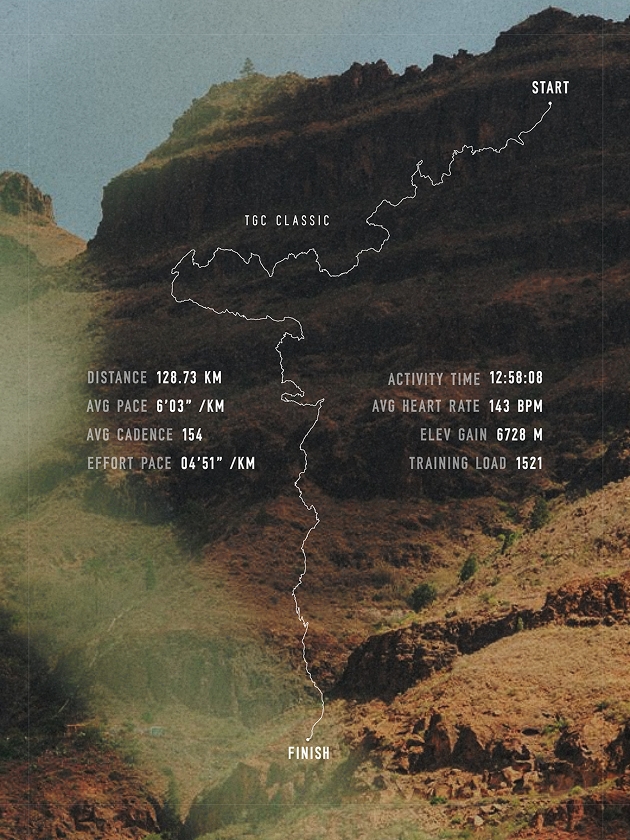
Transgrancanaria Classic is one of the most demanding early-season ultras in Europe. The race crosses the island of Gran Canaria from north to south, covering 125 kilometers with nearly 6,700 meters of climbing. Athletes start at midnight on the northern coast and finish the next afternoon near the desert dunes of Maspalomas. This year, weather once again shifted dramatically along the way. Cold rain and wind dominated the mountains overnight before giving way to heat and exposed terrain later in the race.
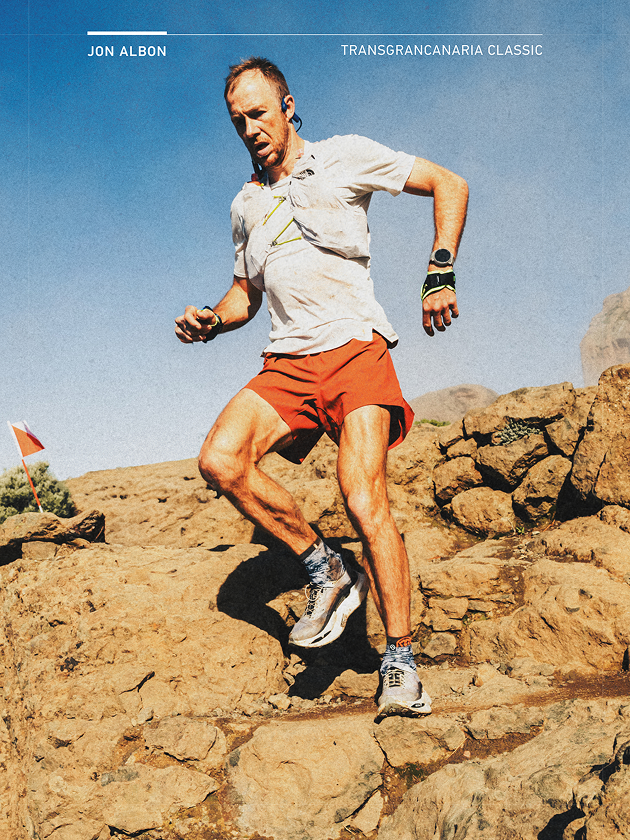
Jon Albon completed the journey in 12:58:08, finally securing a victory after coming close last year.
While race coverage often focuses on dramatic moments or section splits, the real story behind this performance lies in how the race was managed from start to finish. The data from Jon’s race shows a nearly perfect example of ultra-distance pacing and execution.
A Course That Forces Strategic Pacing
Trail races like Transgrancanaria are dictated by terrain rather than strictly speed. The course climbs through pine forests, crosses volcanic ridges, and descends long technical paths before opening into faster desert sections near the finish. It's well-suited for Jon, who is known for his technical skills and versatility.
Raw pace rarely tells the full story. Uphill hiking, technical descending, and runnable sections constantly distort splits. Not to mention the environmental factors. What matters most is maintaining a consistent physiological effort across the entire course. The best metric for that? Heart rate.
Across the entire race Jon spent:
- 32% in Zone 1
- 67% in Zone 2
- 1% in Zone 3
This aligns directly with the physiological goal many elite ultra runners pursue: staying below the first lactate threshold (LT1) for as long as possible. LT1 typically sits where zone 2 ends and Jon spent all but 5 minutes of the race below this line.
Equally important was what didn't happen during the race: cardiac drift. Even in the final hours of competition, Jon’s heart rate remained stable. That stability reflects controlled early pacing, consistent fueling, and specific Zone 3 training.
Maintaining control for nearly 13 hours is extremely difficult, especially on terrain that encourages frequent surges.
That control is the foundation of successful ultra racing.
Early Race Dynamics
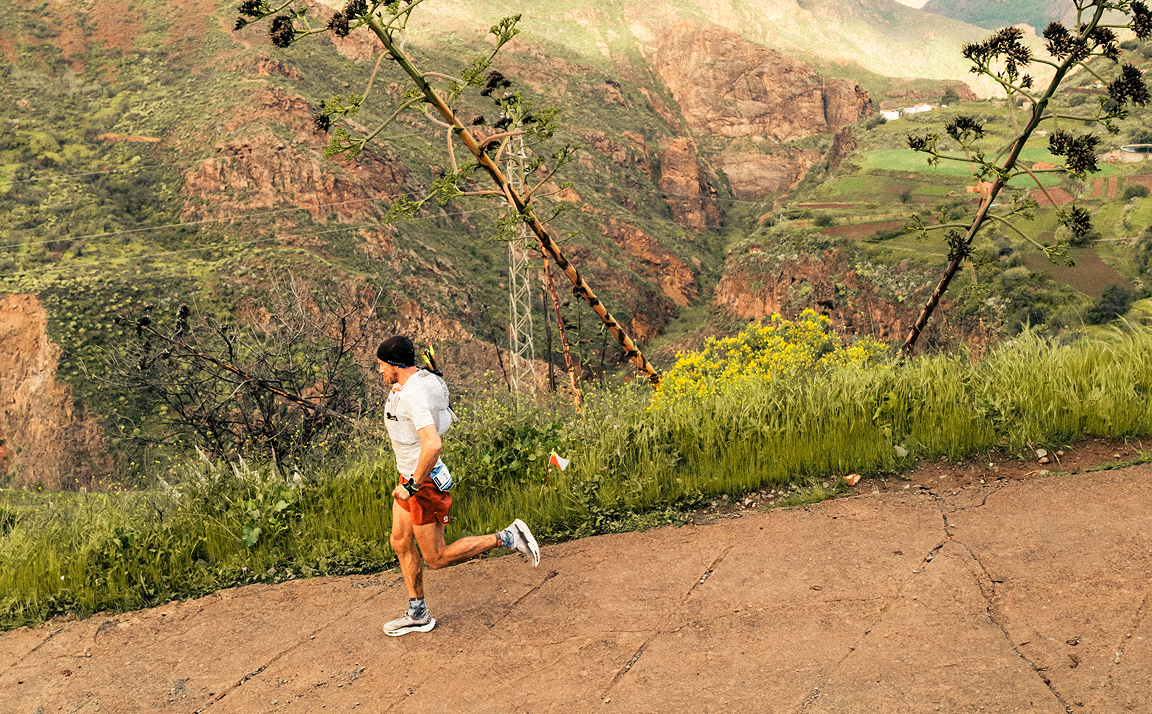
The opening hours of the race added another layer of complexity. A lead group formed early, including Jon, Tom Evans, Josh Wade, and Hannes Namberger. Rather than settling into a steady rhythm, the group dynamics created fluctuating pacing.
The lead group had a large enough cushion that they wouldn't be caught. As a result, the pace often surged and slowed depending on who was leading.
Recalling the early parts of the race, Jon noted, "I'd work on the front, kind of get a bit annoyed at working so much, then sit back, and then the pace seemed to drop."
Those changes can be surprisingly taxing. Constantly accelerating and decelerating forces the body to adjust effort repeatedly rather than maintaining a steady output. However, the lighter pace may have helped preserve energy for the second half of the race.
Eventually the group thinned as conditions took their toll. Evans dropped out and Namberger started to fall back. The race had narrowed to two.
The Tactical Move That Decided the Race
The only time Jon entered Zone 3 during the entire race was a brief effort required to close the gap after stopping to change shoes. He didn't want Josh to get the adrenaline rush of opening a lead.
That effort lasted just under five minutes and it was the only significant spike in intensity all day, but Jon acknowledged the risk.
"That was where I could have ruined my race. Because if you spend 5 minutes pushing too hard, that can actually burn enough matches that the whole rest of the race is unstable."
From the course’s highest point, the descent toward Tejeda aid station (79.2 km) opened a gap at the front. Jon and Josh had separated themselves, while Hannes held onto third. After a remarkably quick aid station, Jon continued in the lead. Shortly after, Josh left the aid station and surged past Jon on the climb to Roque Nublo. Jon recognized that this could be the defining moment of the race.
"It's a long way to the finish still, and how you pace the first minute or two of a climb is really important. You should always try and gradually build into the effort level when you hit an uphill, but he was absolutely going for it."
Jon stayed controlled and kept within striking distance of his competitor. When Josh stopped briefly to remove his jacket to avoid overheating, Jon seized the opportunity. By the next aid station (89.1km), he had a two-minute lead.
Once the gap opened, Jon faced a new challenge: maintaining it alone for the remaining distance.
Holding a lead for that long requires both physical and mental discipline. The time gap fluctuated between 2 and 10 minutes, but Jon was never quite sure of his lead. During the race, reliable information is rarely available. After the dust settled, he finished 5 minutes ahead of 2nd place.
Training Changes That Made the Difference
Jon approached the 2026 race with several adjustments to his preparation compared to the previous year. None of the changes were extreme, but together they improved his durability and efficiency over long distances.
1. More Flat Training
Instead of running hills in most of his training sessions, Jon added more flat road running to develop sustained aerobic output. Trail runners often emphasize climbing and descending, but flat running forces the body to work continuously.
To maintain the muscular preparation needed for steep descents, he still included targeted mountain sessions. Every couple of weeks he would travel to terrain that allowed him to accumulate significant downhill running. This approach separated aerobic development from specific leg conditioning rather than trying to achieve both in every run.
2. Progressing Volume, Adjusting Intensity
Jon has been slowly increasing volume for the past two seasons. At first, Jon focused almost entirely on increasing volume while keeping intensity low. By 2026 he had a sizeable base, which allowed him to progress his volume more slowly and experiment with Zone 3 intervals. This helped improve sustainable speed without sacrificing the aerobic durability required for ultras.
3. A New Fueling Strategy
The last adjustment came in the form of carbohydrates, where he switched his intake to once every 30 minutes.
"I had a completely different fueling strategy and that meant I did have better energy through to the halfway mark as well."
Combined with disciplined pacing, the improved fueling ensured he had enough energy to strike when the time was right.
Training Data Builds Race Intuition
Although race data provides valuable insights afterward, Jon was not constantly checking his watch during the event. Instead, his pacing decisions were guided primarily by feel.
Training had already taught him what different intensity levels felt like.
"As long as I'm in zone 2, I'm pretty comfortable."
That familiarity allowed him to stay within the right effort range without needing to monitor it constantly during the race.
When athletes consistently train with heart rate and effort data, they gradually develop an internal sense of pacing. Over time, that awareness becomes one of the most valuable tools in any endurance sport.
Reducing Mental Load During the Race
Even with strong pacing instincts, a 13-hour race creates significant mental demands. Navigation, fueling, and logistics all compete for attention while athletes are already managing fatigue.
During Transgrancanaria, Jon relied on two key watch features to simplify those tasks: navigation and nutrition alerts.
Navigation ensured he remained confident on the course as it moved through remote volcanic terrain, while nutrition alerts helped maintain consistent fueling throughout the race.
By offloading those responsibilities to the watch, Jon could focus his attention on pacing, terrain, and competitors.
Jon also noted the mental advantage of race experience on the course.
"Each race does have its own personality, and once you get to know that personality, it's a lot easier for you. I knew the course, knew how I felt at different places, and already had a lot of reference points."
He had raced here before, while his competition hadn't. Each edition has similarities, but also brings something new. For Jon, the combination of the two led him to victory.
"That's the beauty with trail running. It can be a completely different experience even though it's the same race. I've never done such a tactical race like that, from the sort of like games at the beginning with people not wanting to pull and the pace just suddenly dropping off, to then sort of like battling with someone tactically to try and like choose your moment to push forward. It was fun."