/filters:quality(90)/fit-in/970x750/coros-web-faq/upload/images/3e1889aa0280af73315fbb2c9f65b3e9.jpg)
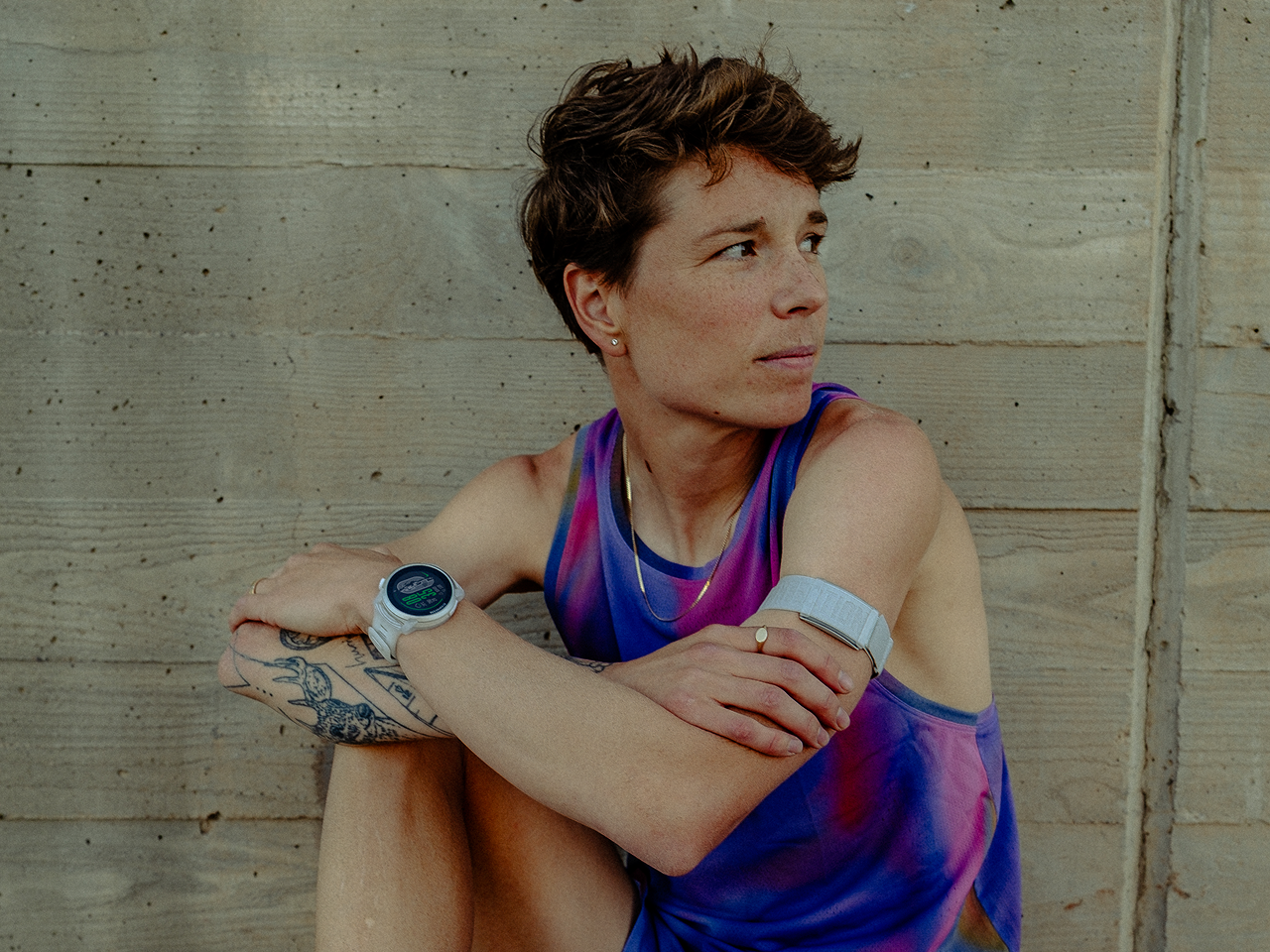
Lauren Ryan is an Australian middle and long-distance runner and one of the top distance specialists her country has produced. She’s built her career on uninterrupted consistency, which has led her to several global championships, including the Paris Olympics where she set the Australian 10K record. Below, we give an inside look at Lauren's training methods and what’s driving the build toward her next target, the Commonwealth Games 10K.
Training Style & Philosophy
Lauren’s training is straightforward by design. She runs on a 7-day cycle, completing two key workouts per week. Weekly mileage typically hovers between 55 and 80 miles, rarely wavering even across race periods. She ran 13th at World Cross Country in January without a noticeable dip in weekly mileage.
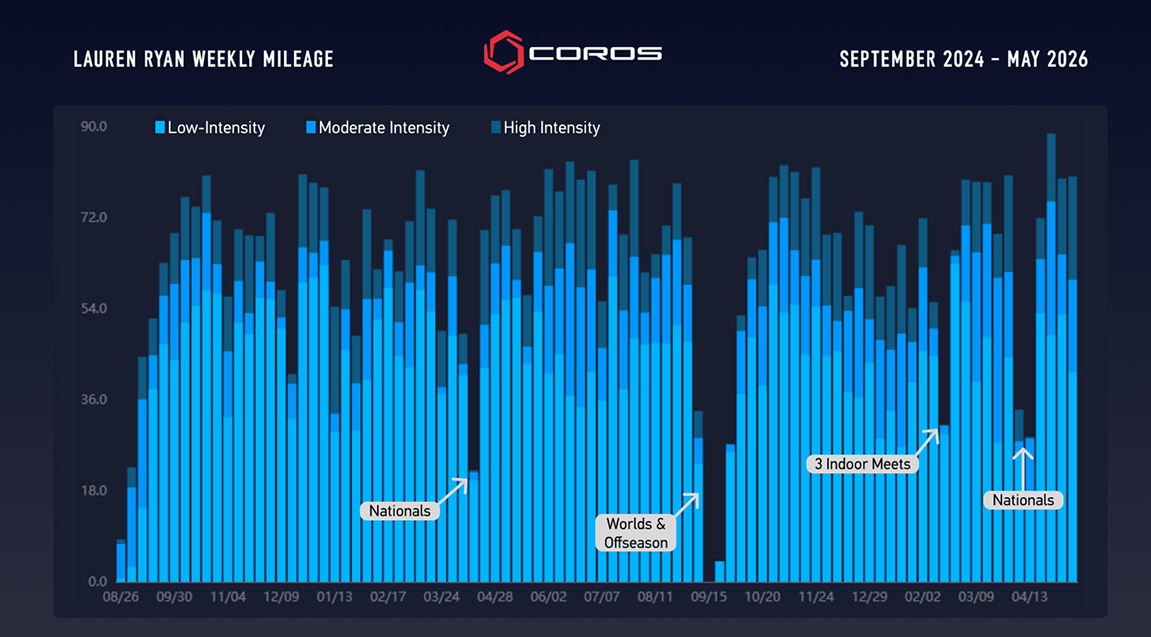
Lauren's training volume for the 2025 & 2026 seasons
Over the last 18 months, her training volume has only seen a handful of meaningful dips for key races, along with a brief offseason. Aside from that, training is clockwork. Lauren credits this consistency in training as the driving force behind her performance.
“Consistency is the key in this sport, and it’s not just consistency over one season. I’ve had really consistent running for the last four or five years. We’ve been able to layer it and layer it and layer it and kind of take a step up in everything.”
The layering philosophy takes what has worked for her, and builds on it. She hasn't shifted her routine to include double threshold sessions or lactate tests like many professional runners have. Her approach is focused on maximizing the fitness she can get from a routine that's proven to work for her.
“More doesn’t mean better. Maybe we can just be better at what we’re doing already. We’ve been doing 15-mile long runs, why aren’t we just doing the 15 miles a little bit faster?”
Altitude Training: Evolving Without Rushing
Lauren's approach doesn't avoid change, though. When the time is right, she embraces it. In May of last year, right after winning Australian nationals, she moved to Flagstaff, Arizona. It was her first serious high-altitude training block, and a bold move with a World Championship cycle already underway.
She didn’t arrive and immediately try to replicate her sea-level training at altitude. Following her coach's recommendations, Lauren used her COROS PACE 4 to monitor heart rate on every easy run until her aerobic system adapted to the new environment.
“He was like, 'You cannot jog any quicker. If your heart rate goes over 154, you need to slow down.' We looked at what my average heart rate would be at sea level, and he’s like, 'When you first come out, I don’t care what you do, but you need to stay at this at least for the first three weeks.'”
This shows two levels of strategic patience. First, Lauren had already built years of high-level consistency before making the move to altitude. She didn’t add a new training stimulus until she’d extracted everything she could from her previous environment. Secondly, when she did make the move, she let the adaptation happen on its own timeline rather than forcing it.
The payoff is visible in her data. The same tempo sessions she ran early in the Flagstaff block now come at lower heart rates with equivalent (or greater) mechanical output. What was a significant physiological challenge a year ago has become the baseline.
A Week in the Life
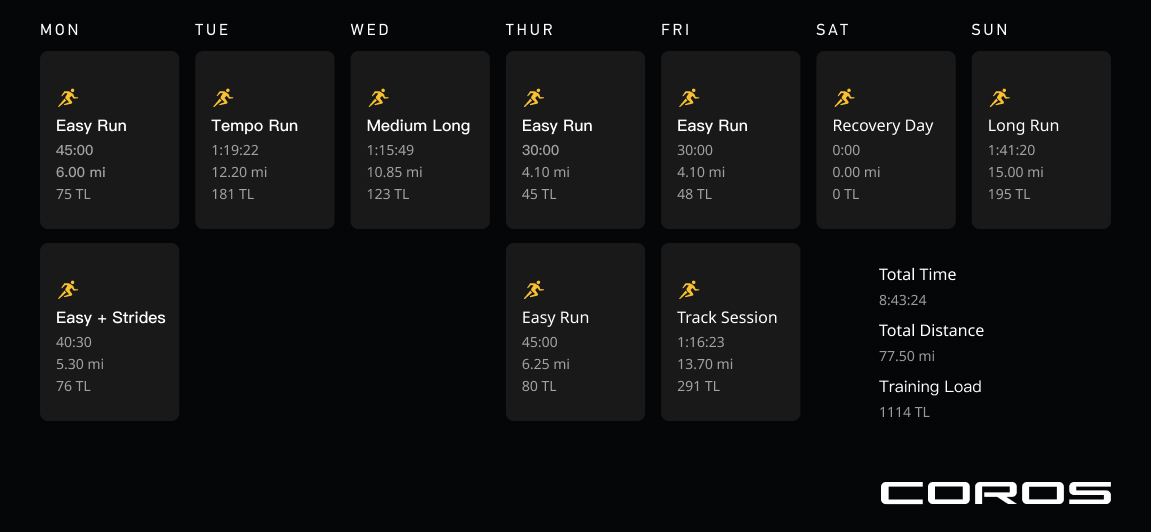
Above is a typical week of Lauren Ryan's training. Of course, the workouts and details can vary week-to-week, but most weeks generally follow the same trends.
Tuesday is typically a threshold or tempo effort. Friday shifts to the track for more specific, faster work. Sunday is the long run. Midweek fills in with a medium-long run and easy miles.
Workout Highlight: Camp Verde Tempo
One of the staple sessions for Lauren’s training group is a tempo run at lower elevation on the roads of Camp Verde, Arizona. They return to this loop repeatedly throughout the season as a reliable benchmark for aerobic fitness.
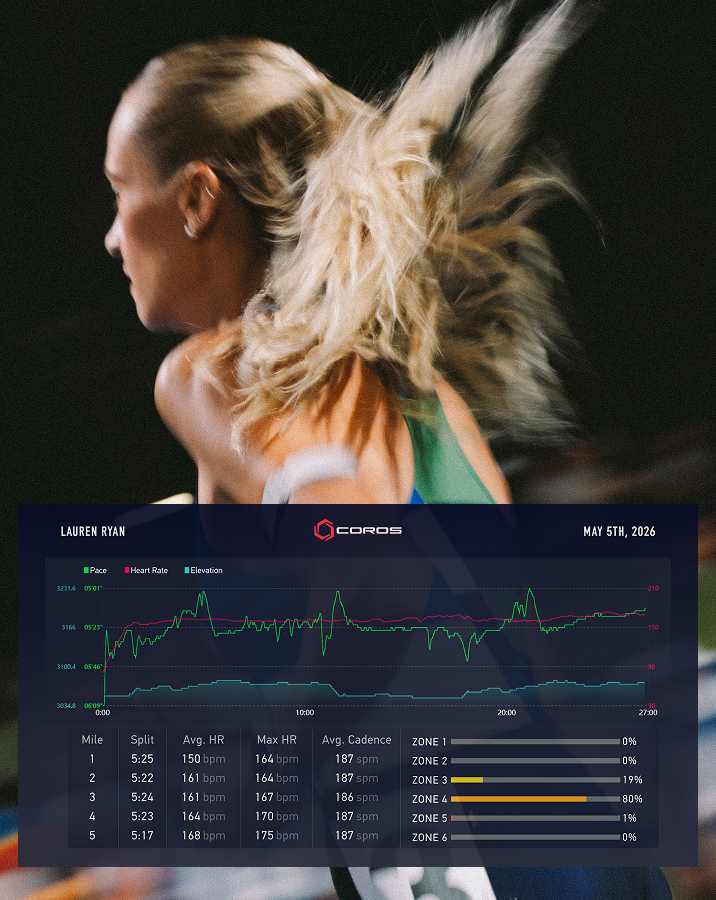
On May 5, Lauren ran five miles at 5:22 per mile. Her heart rate opened at 150 BPM and climbed steadily, reaching 168 by the final split. Throughout all five miles, her cadence held at 187 steps per minute without deviation. Similarly, her pace stayed exactly where she wanted, spending 99% of the run in her Tempo & Threshold Zones (3 & 4).
The Season Ahead
The Commonwealth Games 10K is the target. Lauren has recently been selected for Team Australia. A medal is the goal she’s building toward, and she’s direct about why she believes it’s within reach.
“I think there’s no question why I can’t be up there if I’m fit and healthy. And with my 5K speed, 3K speed, and hopefully continually working on the 1500, I’m also going to be competitive if it’s slow and tactical over 10K.”
That last point on 1500-meter speed helps her prepare for whatever the race may throw at her. A sit-and-kick race over 10K favors athletes who can close hard at 1500-type speed. A quick pace from the start favors those with 10K-specific fitness. She plans to be ready for either scenario.
For Lauren, the path forward looks familiar, and is one that any runner can follow: Tempo, speed, long run, repeat. Improve a little bit each time, and when you've maximized what your routine can produce, add something new.